A single typeface can make or break a luxury brand's online presence. When someone lands on a high-end fashion house, jewelry brand, or five-star hotel website, the heading fonts are the first visual cue that signals quality, exclusivity, and trust. If your headings feel generic or mismatched, visitors subconsciously associate that with a lesser brand experience. Choosing the right luxury brand website heading font pairings isn't decoration it's strategy.
This guide walks through specific heading and body font combinations that work for premium brands, explains why certain pairings feel expensive, and gives you actionable steps to apply them to your own projects.
What makes a font feel "luxury" in the first place?
Luxury typography relies on a few consistent visual signals: high contrast between thick and thin strokes, generous letter spacing, elegant serifs or clean geometric sans-serifs, and restraint. Fonts that feel loud, overly rounded, or playful rarely work for premium positioning. Think of the lettering on a Hermès storefront or a Cartier advertisement it's quiet, confident, and precise.
High-contrast serif typefaces like Didot and Bodoni have been luxury staples for over two centuries. Their dramatic thick-thin strokes echo the aesthetic of editorial fashion magazines. On the digital side, modern interpretations like Playfair Display bring that same drama to web headings while remaining readable on screens.
Minimalist geometric sans-serifs also carry a premium feel. Typefaces such as Futura and Montserrat suggest modernity and clean sophistication the kind of aesthetic you see at Chanel or Aesop.
Why does font pairing matter more than a single font choice?
A heading font alone doesn't do the full job. The relationship between your heading typeface and your body text creates the overall reading experience. A beautiful serif heading paired with a clashing body font looks careless. The contrast between the two needs to feel intentional different enough to create hierarchy, similar enough to feel cohesive.
For luxury brands, this balance is especially important because the audience expects polish at every level. A mismatched pairing feels like a poorly tailored suit: technically functional, but noticeably off. For more context on how different website styles influence these choices, our breakdown of font pairings by website style covers the broader principles.
Which heading and body font pairings work best for luxury brands?
1. Cormorant Garamond + Montserrat
Cormorant is a display serif with refined, high-contrast strokes that feel unmistakably editorial. Paired with the clean geometry of Montserrat for body text, you get a combination that reads beautifully at every size. This pairing works especially well for luxury fashion, skincare, and lifestyle brands that want a balance of classic elegance and modern simplicity.
2. Playfair Display + Josefin Sans
Playfair Display has strong visual personality high contrast, sharp serifs, and a slightly condensed form. It demands attention as a heading font. Josefin Sans as body text provides a quiet, geometric counterpoint. The combination suits boutique hotels, independent jewelry designers, and artisan brands. The key is to set Josefin Sans at a comfortable weight (300–400) so it doesn't compete with Playfair's drama.
3. Cinzel + EB Garamond
Cinzel draws from Roman inscriptional lettering all caps, wide proportions, and strong serifs. It feels timeless and authoritative, making it ideal for heritage brands, luxury real estate, or high-end watches. EB Garamond as body text provides warm, highly readable long-form text that echoes the classical sensibility without overwhelming it.
4. Didot + Futura
This pairing creates sharp contrast between a dramatic serif heading and a minimalist sans-serif body. Didot's extreme thick-thin strokes feel inherently luxurious it's the typeface of fashion magazine mastheads. Futura brings geometric clarity to body copy. Together, they work for brands that want editorial sophistication: think high-end cosmetics, luxury automobiles, or premium interior design firms.
5. DM Serif Display + DM Sans
DM Serif Display is a contemporary serif with moderate contrast and slightly condensed proportions. Paired with DM Sans its geometric sans-serif companion from the same type family you get a pairing that feels harmonious by design. This is a practical choice for luxury e-commerce sites where readability on mobile matters as much as visual appeal. You can explore more modern heading combinations in our modern heading font pairings guide.
6. Baskerville + Helvetica Neue
A Baskerville heading with a neutral sans-serif body is a pairing that British luxury brands have relied on for decades. Baskerville's transitional serif form carries scholarly elegance, while Helvetica Neue provides a clean, unobtrusive reading experience. This works well for luxury brands in finance, publishing, or fine dining industries where tradition and trust matter.
How do you choose the right pairing for a specific luxury niche?
The best pairing depends on what your brand communicates visually:
- Fashion and beauty: High-contrast serifs (Didot, Playfair Display) with clean sans-serifs suggest editorial authority. These brands often reference print magazine aesthetics.
- Hospitality and travel: Transitional or old-style serifs (Baskerville, EB Garamond) with neutral sans-serifs feel warm and established think of a heritage hotel chain.
- Automotive and technology: Geometric sans-serifs in headings (Futura, Montserrat) with a more humanist sans-serif body suggest precision and modern engineering.
- Jewelry and watches: Didone serifs (Bodoni, Didot) or inscriptional fonts (Cinzel) paired with elegant sans-serifs evoke craftsmanship and exclusivity.
- Real estate and architecture: Modern serifs (DM Serif Display) with geometric sans-serifs strike a balance between authority and contemporary taste.
There's no single right answer, but the niche context should guide your instincts. If you're working across multiple brand styles, our full luxury font pairings resource has additional examples organized by industry.
What are the most common mistakes with luxury font pairings?
Choosing two fonts that are too similar. If your heading and body fonts have nearly identical proportions, stroke widths, and x-heights, you lose hierarchy. The reader can't quickly distinguish headlines from body copy. Aim for noticeable but harmonious contrast.
Using too many font weights and styles. Luxury design thrives on restraint. Stick to two or three weights per typeface typically a bold or semibold for headings and a regular or light for body text. Extrabold, condensed, italic, and uppercase variants all fighting for attention creates visual noise, not sophistication.
Ignoring letter spacing and line height. A beautiful font pairing falls flat with default spacing. Luxury heading fonts almost always benefit from increased letter spacing (tracking). Set heading letter spacing between 0.05em and 0.15em for a more refined feel. Body text line height should sit between 1.5 and 1.75 for comfortable reading.
Forgetting about mobile rendering. A heading font that looks stunning on a 27-inch monitor can become illegible on a phone screen. Test your pairing at actual mobile sizes before finalizing. High-contrast serifs like Didot, in particular, need sufficient size to render their thin strokes on smaller screens.
Overusing all-caps headings. All caps can work for short navigation labels or hero taglines, but long headings in all-caps with a serif font become difficult to read. Use sentence case or title case for most headings, reserving all caps for brief, high-impact moments.
How should you set heading hierarchy with these pairings?
A solid luxury heading hierarchy typically follows this structure:
- H1 (page title): Your display or heading font at the largest size, semibold or bold weight, with generous letter spacing. This might be 36–60px on desktop depending on the design.
- H2 (section headings): Same heading font, one step smaller, in a medium or semibold weight. This is where most of your page's scannable structure lives.
- H3 (subsection headings): Either the heading font at a smaller size or, for a subtle hierarchy shift, the body font in bold weight. Both approaches work the choice depends on how much differentiation you need.
- Body text: Your complementary sans-serif or serif at 16–18px with comfortable line height.
The goal is that someone scanning the page can immediately understand the content structure without reading a single full sentence.
Where can you find and test these font pairings?
Google Fonts offers several of the typefaces mentioned above Playfair Display, Cormorant, Cinzel, EB Garamond, DM Serif Display, DM Sans, Montserrat, Josefin Sans at no cost. For commercial typefaces like Didot, Bodoni, Futura, Baskerville, and Helvetica Neue, you'll need to purchase licenses from foundries or platforms like Adobe Fonts (included with Creative Cloud subscriptions).
Before committing to a pairing, build a quick test page with real content not just "Lorem ipsum." Set actual headings, subheadings, body paragraphs, and button text. View it on both desktop and mobile. Google Fonts lets you preview combinations directly in your browser, which is a fast way to narrow your shortlist.
Quick checklist before you finalize your luxury font pairing
- Does the heading font communicate the brand's personality (heritage, modernity, minimalism, opulence)?
- Is there clear contrast between heading and body fonts without visual clash?
- Have you tested the pairing at mobile sizes and checked thin-stroke rendering?
- Are you using no more than two or three font weights per typeface?
- Is letter spacing adjusted for headings (slightly wider than default)?
- Does the body text line height sit between 1.5 and 1.75?
- Have you checked font licensing for commercial use?
- Does the pairing hold up with real content not just placeholder text?
Next step: Pick two pairings from this list, build a simple test page with your brand's actual copy and imagery, and compare them side by side on both desktop and mobile. The right choice usually becomes obvious once you see it in context.
 Font Pairing Guide for Minimalist Website Headings
 Font Pairings for Website Headings by Style Guide
 The Best Font Pairings for Modern Website Headings
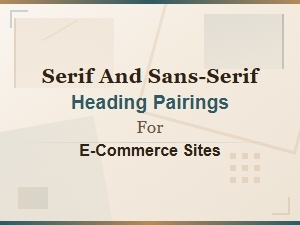 E-Commerce Font Pairings: Serif and Sans-Serif Heading Combinations That Drive Sales
 Best Serif and Sans-Serif Font Pairings for Web
 Serif and Sans-Serif Heading Font Pairings for E-Commerce Websites